ZEB needs integrated concepts with simple solutions
ZEB standards define how to create buildings and districts that use minimal energy from construction to operation. Covering architecture, technology, and life-cycle performance, they guide sustainable design while driving innovation and integration of renewable energy solutions.
Standards, frameworks and guidance leading architectural design and building construction toward net-zero carbon emissions
POLICY /
Standards
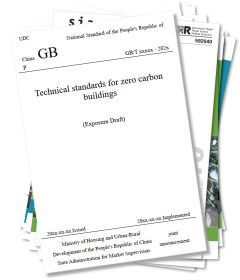
ZEB standards provide guidance and targets for the planning, design and construction of buildings and districts in accordance with national net-zero goals.
Building certifications provide frameworks to assess and optimize the environmental performance and reduce CO2 emissions across the building lifecycle.
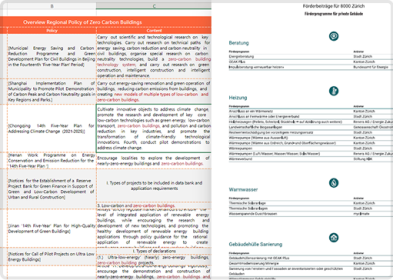
Advice and tools for building professionals and authorities for the planning, design, operation and assessment of buildings and districts in accordance with ZEB policies and standards
Technical solutions for planning, design, construction and management of buildings and districts to reduce energy consumption and CO2 emissions.
SOLUTIONS /
Operational Emissions
Operational CO₂ emissions derive primarily from building energy consumption including for heating, cooling and other energy requirements, with costs for improving energy efficiency offset by lower operational costs.
Embodied CO₂ emissions are associated with the production, transportation, installation, maintenance, and disposal of the construction materials across the building lifecycle.
Integrated district solutions harness synergies between buildings and within communities to improve energy efficiency and reduce CO₂ emissions at the urban scale.
Showcasing the technical and economic feasibility of Zero Emissions Building
Chongqing
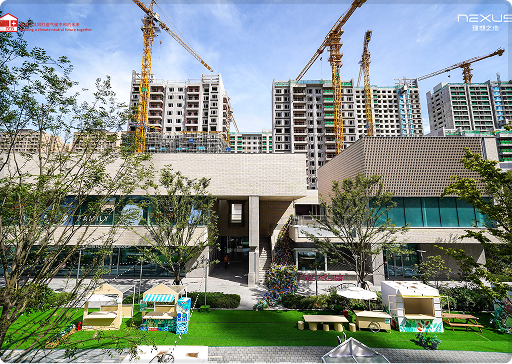
Science Valley Zero Carbon Demonstration Building Phase III, Chongqing
To reduce operational emissions this exhibition complex at Chiongqing integrated BIPV shading and efficient interior design to optimize energy consumption, comfort, and CO₂ emission reduction.
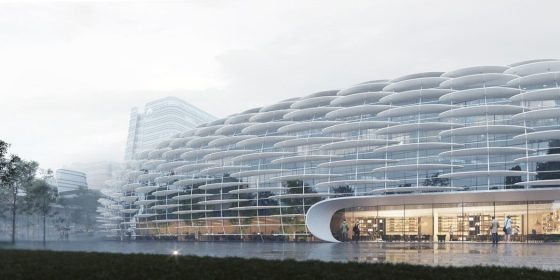
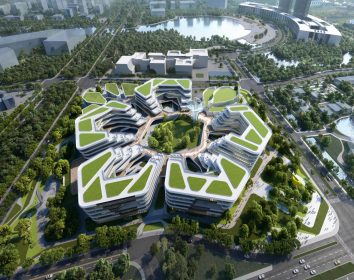
Shangxian Lake Low-Carbon Digital Industrial Park Phase II, Wuxi
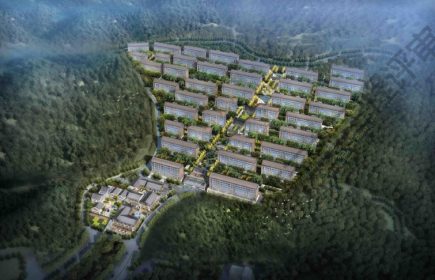
Striking architectural form is combined with a holistic emissions reduction strategy addressing micro-climate, mobility and operational energy efficiency with energy-efficient systems including ground source heat pumps for space heating and cooling.
This office building and training centre responds to local climatic conditions with natural cooling and ventilation strategies and energy-efficient building technologies including an intelligent control system and building integrated photovoltaics.
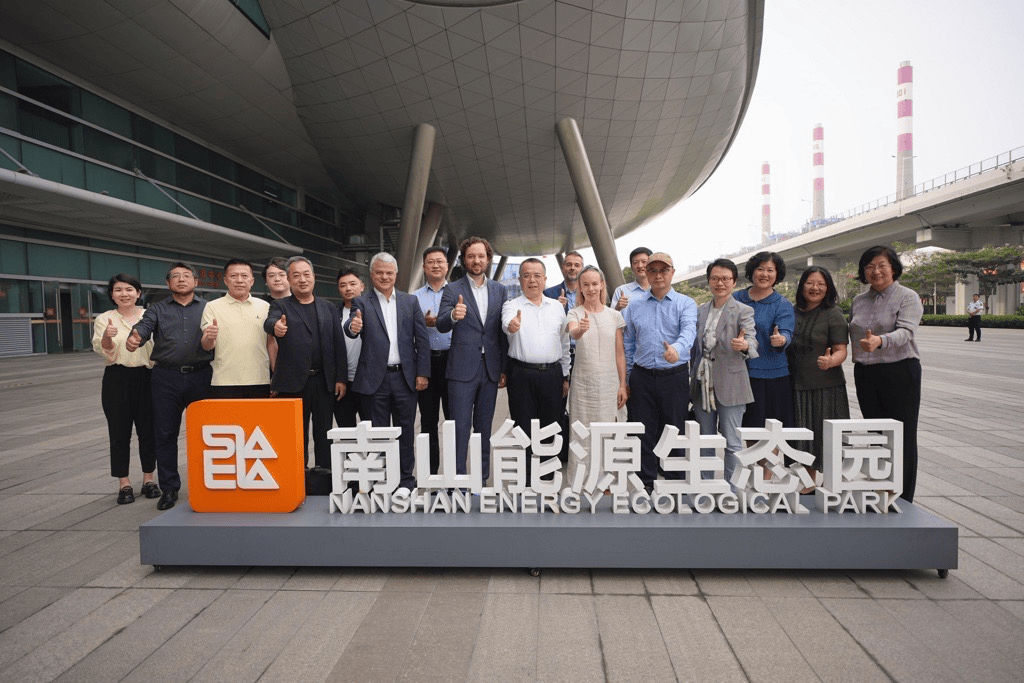
Shenzhen Nanshan Energy Ecological Park Zero Carbon World
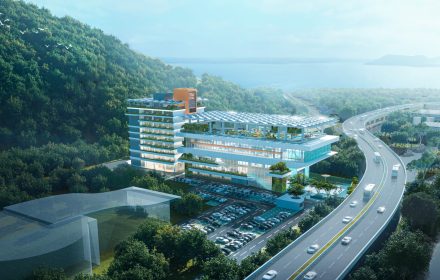
This recreational centre recycles heat from the adjacent waste incineration plant while integrating architectural features such as shading and water-cooled glazing to reduce heat load and energy consumption.
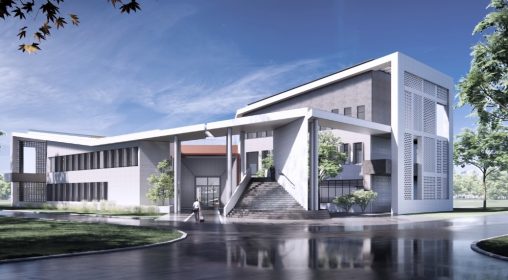
This training centre within a large education campus achieves ZEB certification through integration of state-of-the-art building systems for heating , cooling, mechanical ventilation, and heat recovery.
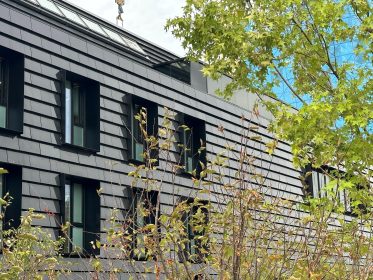
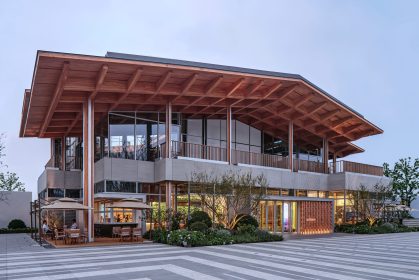
This commercial building within a new low-emissions district at of Shanghai reduces embodied CO₂ emissions through integration of a timber structure and operational CO₂ emissions through a high performance façade and building integrated photovoltaics.
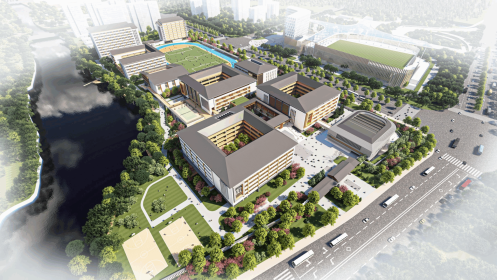
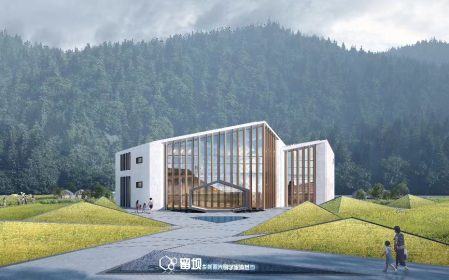
This large institutional building in a rural setting reduces energy consumption and CO2 emissions through energy-efficient lighting, natural ventilation and building-integrated photovoltaics.
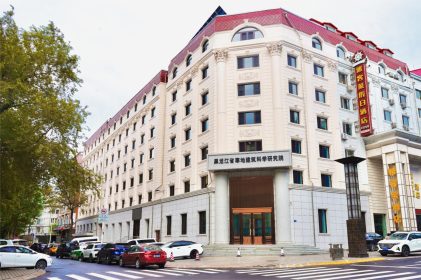
This renovation project achieves ZEB standards within heritage building constraints through integration of a sophisticated composite façade system combining high-performance windows with internal and external wall insulation.
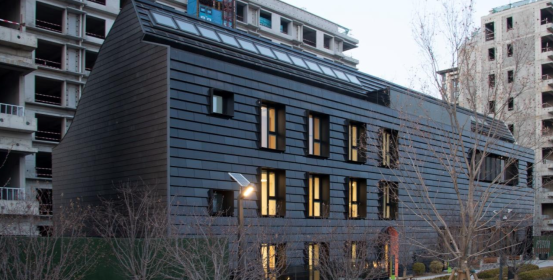
This community centre attached to a residential development in Fangshan District, Beijing increases energy efficiency through natural ventilation and energy production using building-integrated photovoltaics (BIPV).
Explore ZEB topics and media including technical solutions, training material, research reports and much more…
Discover the ZEB Knowledge Hub – your gateway to the latest policies, standards, solutions, demo projects, and teaching resources on Zero Emission Buildings. With smart search and easy filters by media, topic, or language, finding exactly what you need has never been simpler.
An international collaboration funded by the Swiss Agency for Development and Cooperation in partnership with the Chinese Ministry of Housing and Urban-Rural Development.