








Zero Emissions Building (ZEB) standards include performance criteria and technical requirements that define what constitutes a zero-emissions building or district. ZEB standards are one component of regulatory frameworks that can promote or mandate reductions in operational and embodied CO2 emissions.
ZEB standards and other components of regulatory frameworks are context-specific and reflect specific priorities as well as local regulatory and environmental conditions. Standards may be initially formulated at national level, then adapted to specific provincial or local priorities and conditions.
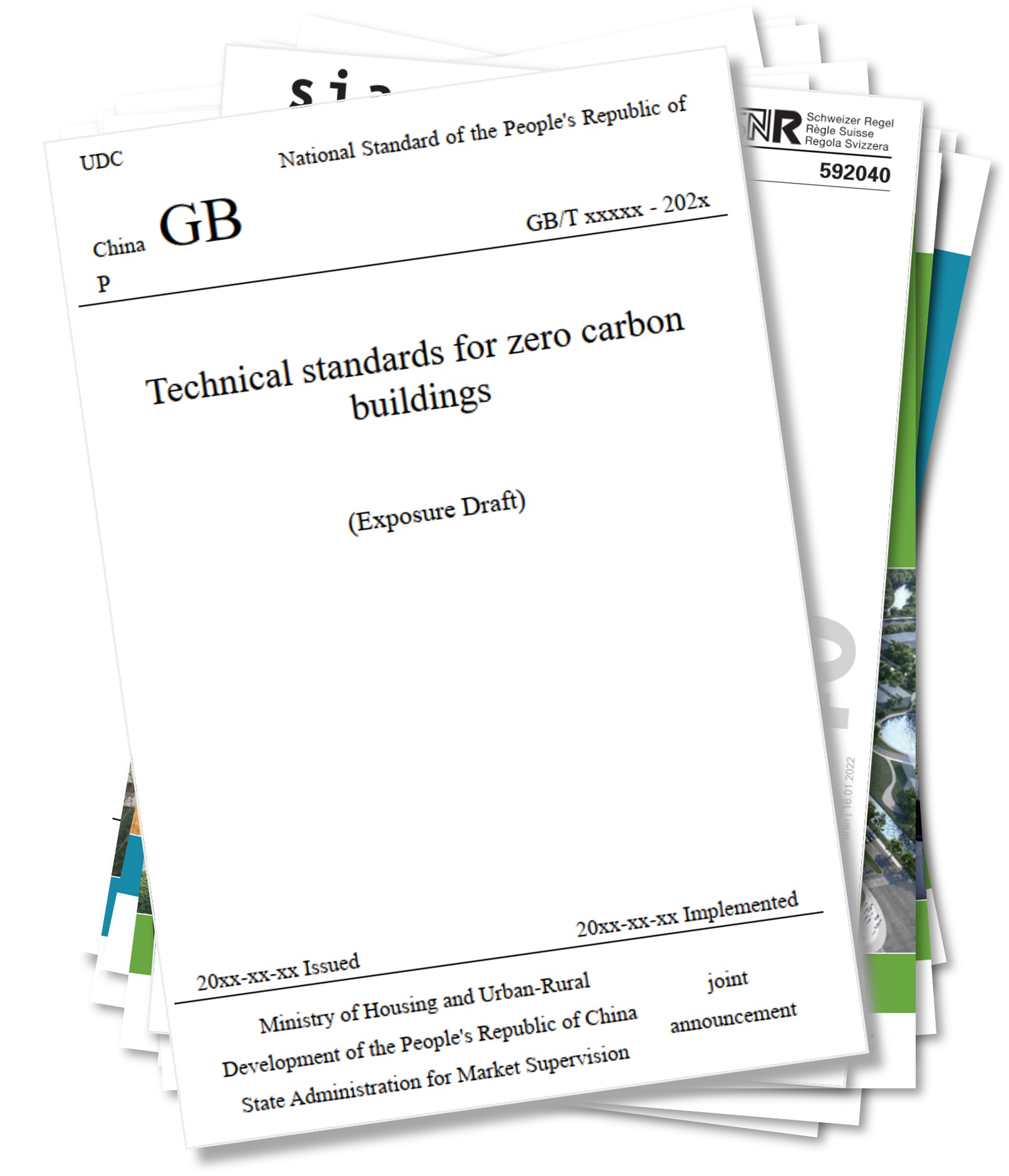
Rapid development of building energy and emissions standards in China in recent years has included the Technical Standard for Nearly Zero Energy Buildings (GB/T 51359-2019), the Standard for Energy Efficiency and Renewable Energy in Buildings (GB 55015-2021), and a new Technical Standard for Zero Carbon Buildings (2024 draft under public consultation). Rapid evolution of these standards responds to ambitious national net-zero CO2 emissions targets.
Switzerland has a long history of evolving regulation of building energy performance and CO2 emissions, including federal, cantonal and municipal regulatory instruments and a range of standards published by the Swiss Society of Engineers and Architects (SIA).