

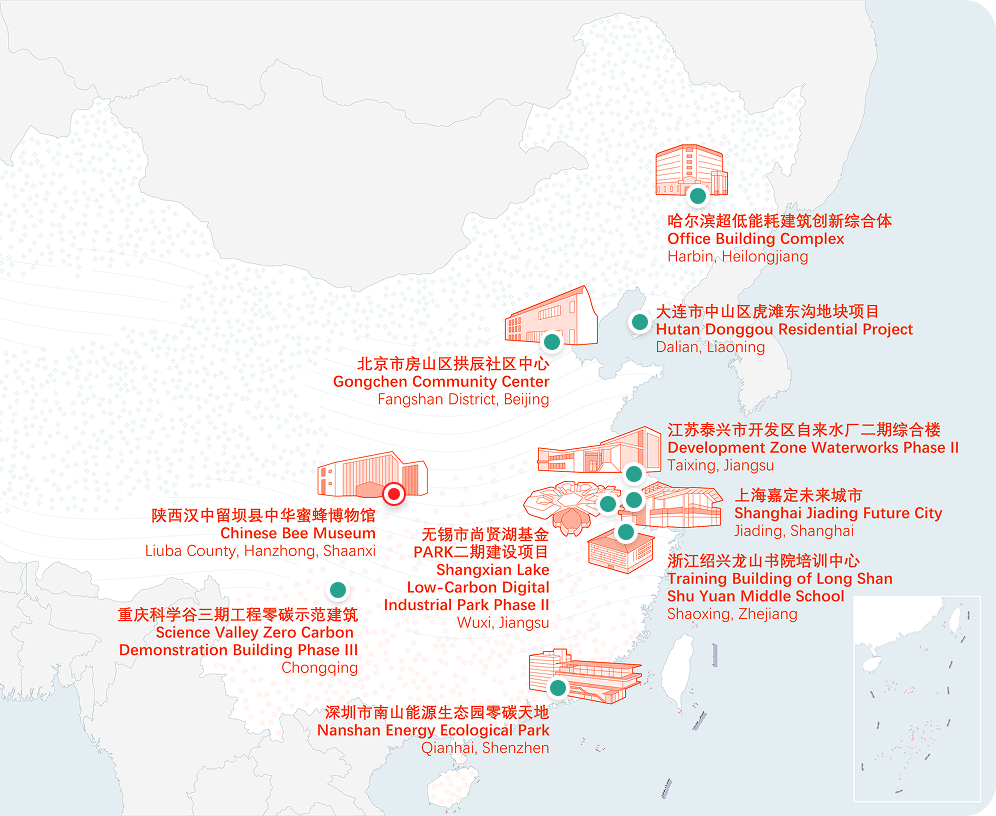
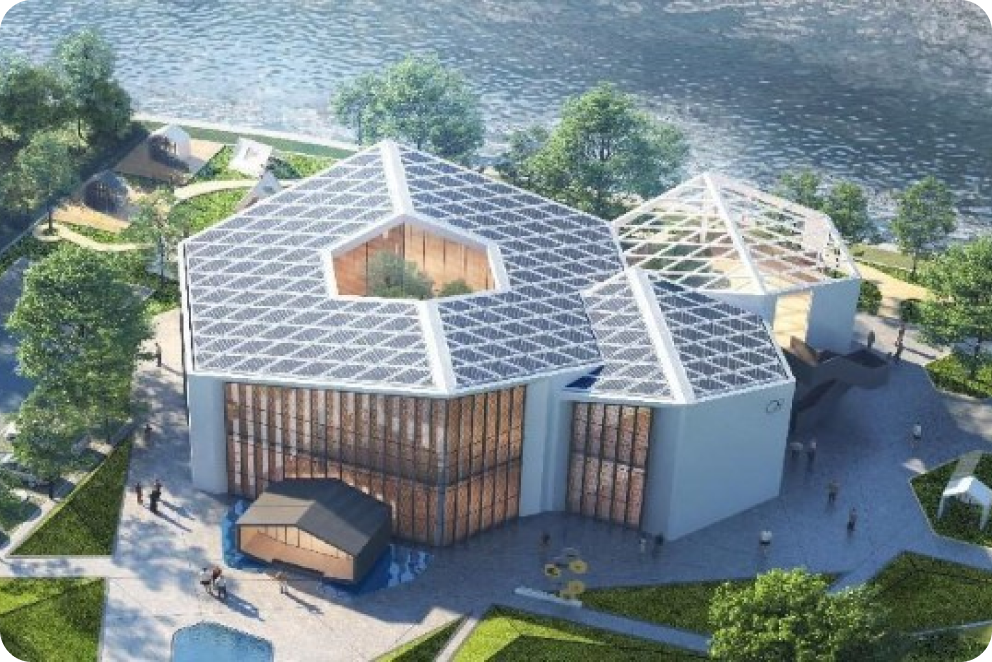
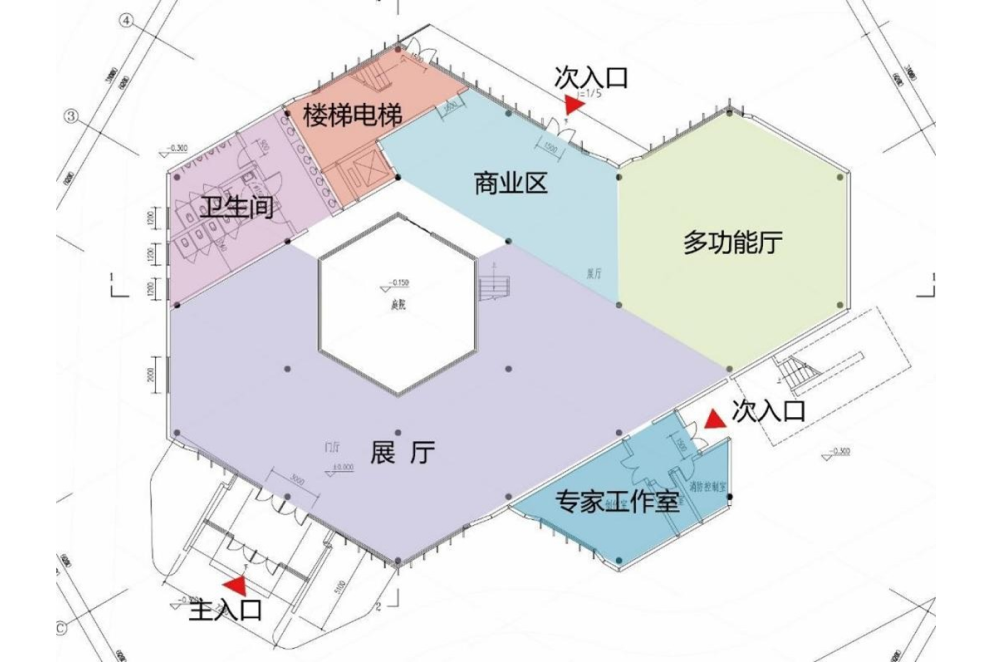
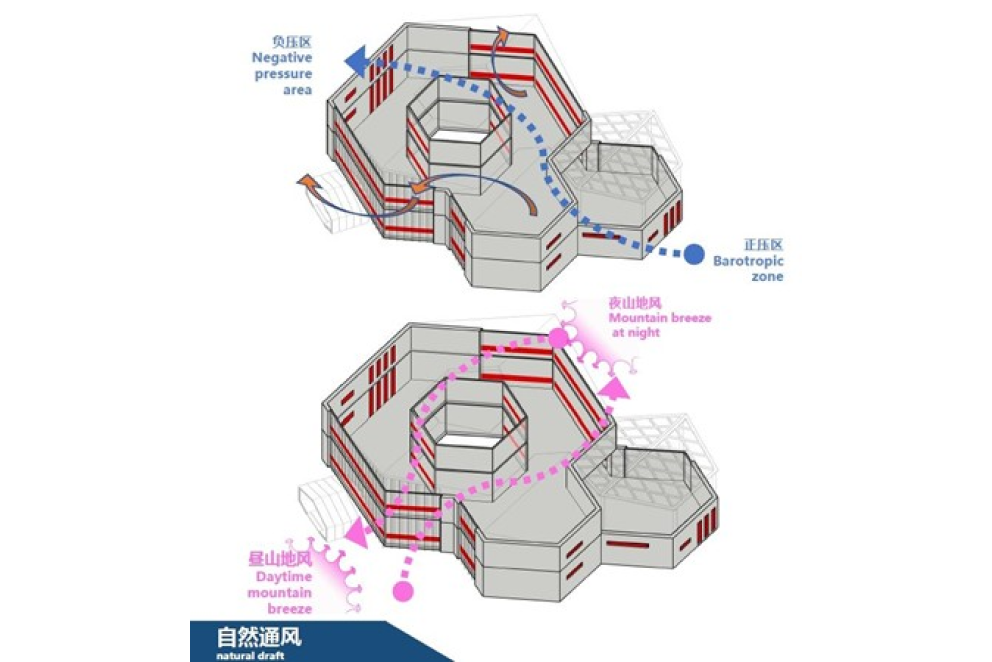
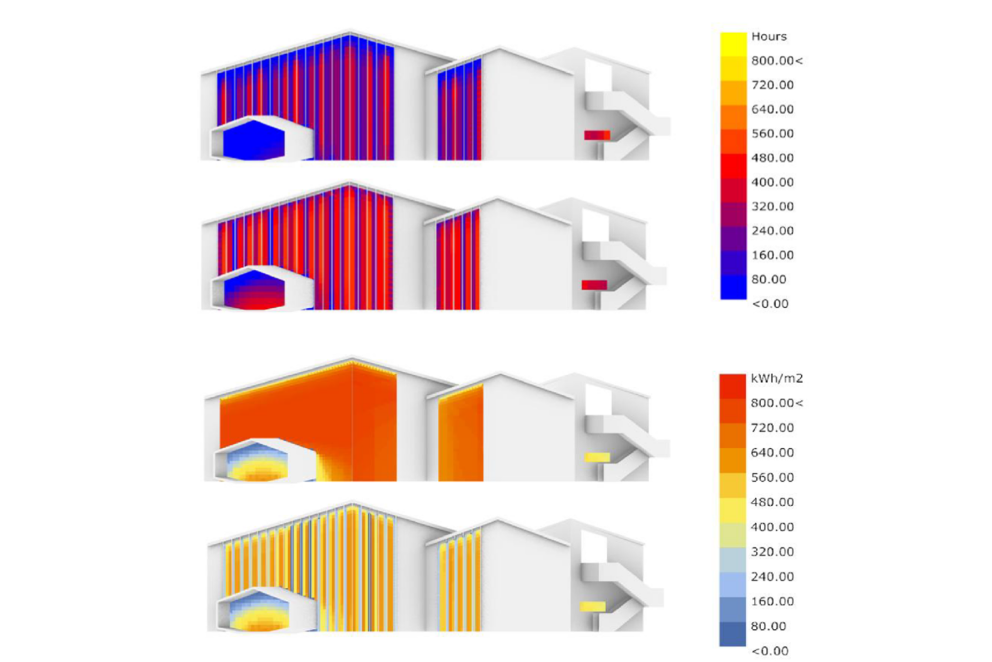



The Chinese Honeybee Museum in Liuba County, Shaanxi Province, is a model of zero-emissions building (ZEB) design for new institutional facilities, developed under the Sino-Swiss ZEB Project. Its honeycomb-shaped steel structure maximizes daylight and natural ventilation, while passive design strategies—such as structural shading, glass curtain wall openings, and optimized building depth—reduce solar gains and cooling loads.
The energy system combines air-source VRF units for heating and cooling, mechanical ventilation with heat recovery, and efficient lighting. A major feature is the 112.9 kWp photovoltaic system, which includes BIPV on the roof, BAPV above the parking area, and CdTe thin-film PV integrated into vertical sunshades. Together, these systems produce nearly twice the building’s annual energy demand, achieving zero operational carbon.
Circular construction principles guided design for disassembly, reuse of recycled materials, and biodiversity-friendly landscaping. Flexible interior layouts further support long-term adaptability and sustainable use.