


Circular Construction
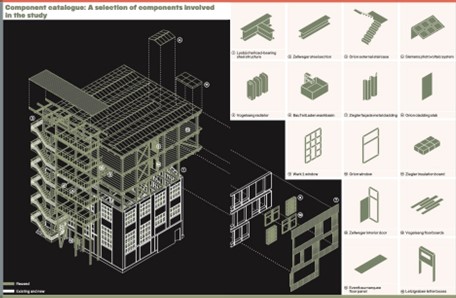
Circular construction focuses on minimizing waste and reducing embodied carbon by reusing, refurbishing, and recycling building materials. This approach contrasts with traditional linear construction models, which often involve extracting new resources and generating significant waste. By adopting circular principles, such as designing for disassembly and using reclaimed materials, the construction industry can lower embodied emissions and promote resource efficiency. Circular construction supports the transition to a more sustainable and regenerative built environment.
University Lecture /
Opportunity and Challenges of Material Reuse in China (CN/EN)
This lecture explores material reuse in construction, highlighting lifecycle thinking, workflows, challenges, case studies, and architects’ leadership.
Workshop /
ZEB Design with Low Carbon Building Material (CN/EN)
This ZEB Talk presents embodied carbon reduction strategies using material-efficient design, circular construction, LCA, hybrid timber, and Swiss tools.
ZEB Talk /
Circular Building – Best Practice in Switzerland (CN/EN)

This ZEB Talk explores circular construction, highlighting reuse, regulations, case studies, and sustainable development.
ZEB Talk /
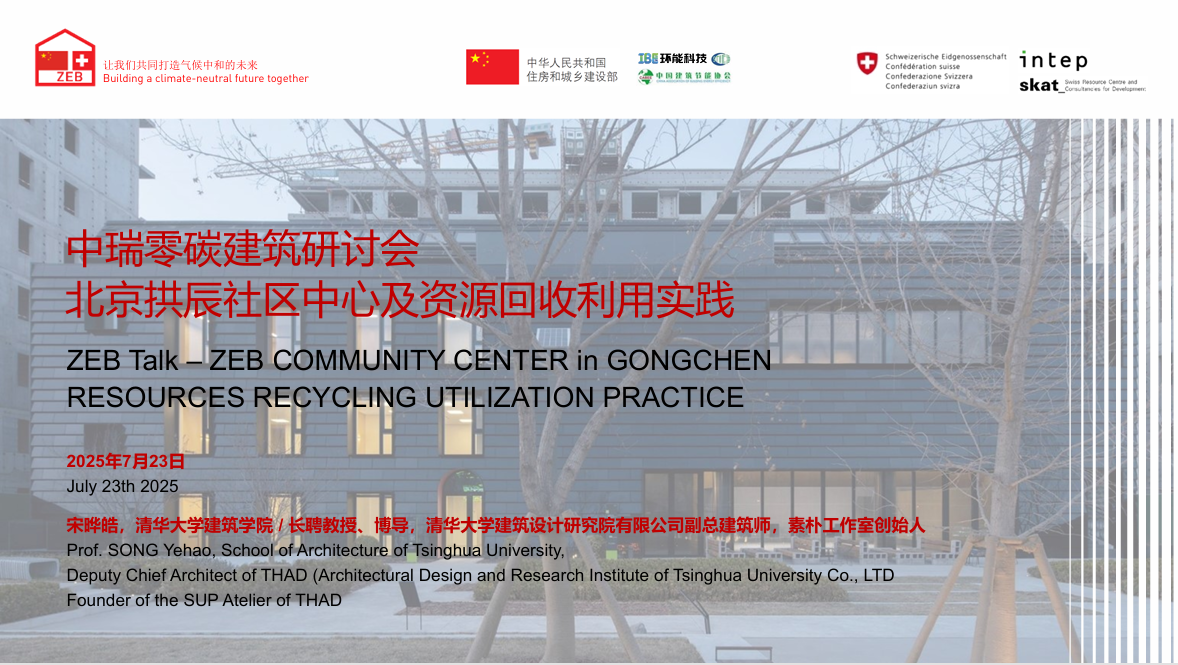
Resources Recycling Utilization Practice (CN/EN)

This ZEB Talk explores circular construction, highlighting reuse, regulations, case studies, and sustainable development.
ZEB Talk /
ZEB Design with Low Carbon Building Material (CN/EN)

This ZEB Talk highlights reducing embodied carbon with life cycle assessment, circular construction, reused materials, and modular, low-carbon design.
University Lecture /
Circular Construction – Swiss Experience (CN/EN)
This lecture presents Switzerland’s circular construction practices, highlighting reuse, disassembly, modularity, CO₂ savings, and the Chinese applications.
Demonstration Project Report /
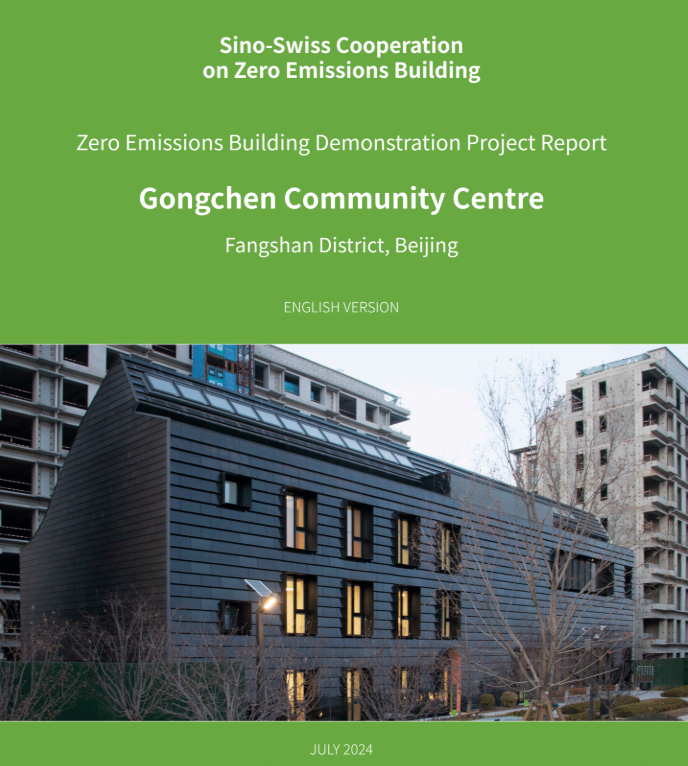
Gongchen Community Centre Beijing (EN)
Beijing’s Fangshan Community Center Demonstration project highlights BIPV, recycled materials, and replicable innovations.